Variable-Speed Pool Pumps matchup
Hayward TriStar VS Variable-Speed Pool Pump (1.85 THP, W3SP3202VSP) vs AQUASTRONG Variable-Speed Pool Pump (1.5 HP, In/Above-Ground)
the two ends of the variable-speed tier — $2,199 against $599
Tale of the tape — this fight hasn't been booked yet
No showdown has ruled between these two. What follows is the verified data, not a verdict.
Ringside notes
These two sit at the two ends of our variable-speed board. Our variable-speed showdown is a pound-for-pound roundup, so it bills picks by role rather than ruling pairs; this page is a tale of the tape. Since 8 October 2026 the Hayward TriStar VS has held the showdown's best overall, and the AQUASTRONG has been the budget way in throughout. The gap is the widest on the board: $2,199 against about $599, more than three and a half times the money. What the Hayward buys is capacity and backing. It is 1.85 total HP with high flow, rated to replace up to a 2.0 HP pump, on the EPA's ENERGY STAR list, with Hayward's parts network behind it, on a 4.7★ owner score across 310 ratings with the smallest critical share in the field — and when those critical reviews do come, they describe a motor Hayward sells only as a whole power end. Buy it from Pool Supplies Superstore on the listing, which Hayward's authorized-seller list marks for Amazon, not the buy-box seller, which has no row on it. The AQUASTRONG is a 1.5 HP nameplate, publishes no max flow figure, has no row on the EPA's ENERGY STAR list, and is an off-brand whose long-term support is the open question — on a 4.4★ score that rests on 255 ratings pooled across its three horsepowers. Both are 230V-class: the AQUASTRONG's listing reads 220V. Read that way the star averages are the least useful thing here. If your pool is large, your pipe run is long, or you are driving water features or in-floor cleaning, the AQUASTRONG cannot be sized for it with confidence because there is no flow number to size against. If your pool is standard and the budget binds, the Hayward is headroom you would pay for and never use, and the AQUASTRONG is the only one of the two that fits an above-ground pool. Between them, our showdown now cards the LINGXIAO Relaax220-VS — on the ENERGY STAR list at about $999, on early data.
What would decide it
- Owner proof: Hayward TriStar VS Variable-Speed Pool Pump (1.85 THP, W3SP3202VSP) reads 4.7★ across 310 owners; AQUASTRONG Variable-Speed Pool Pump (1.5 HP, In/Above-Ground) reads 4.4★ across 255. Depth of sample matters as much as the star.
- The money: Hayward TriStar VS Variable-Speed Pool Pump (1.85 THP, W3SP3202VSP) streets ~$2,199, AQUASTRONG Variable-Speed Pool Pump (1.5 HP, In/Above-Ground) ~$599 — MSRPs, not sale lows, decide the tier.
- Hayward TriStar VS Variable-Speed Pool Pump (1.85 THP, W3SP3202VSP) — your pick if: you've got a large or high-head pool — the 1.85 HP of headroom and a 4.7★ owner rating earn the premium; on an average-size pool it's more pump than you need.
- AQUASTRONG Variable-Speed Pool Pump (1.5 HP, In/Above-Ground) — your pick if: you want variable-speed savings for the least money — about $599, fits in-ground or above-ground, and a strong 4.4★; the trade is an off-brand with no dealer network behind it and a rating pooled across three horsepowers.
The full cards
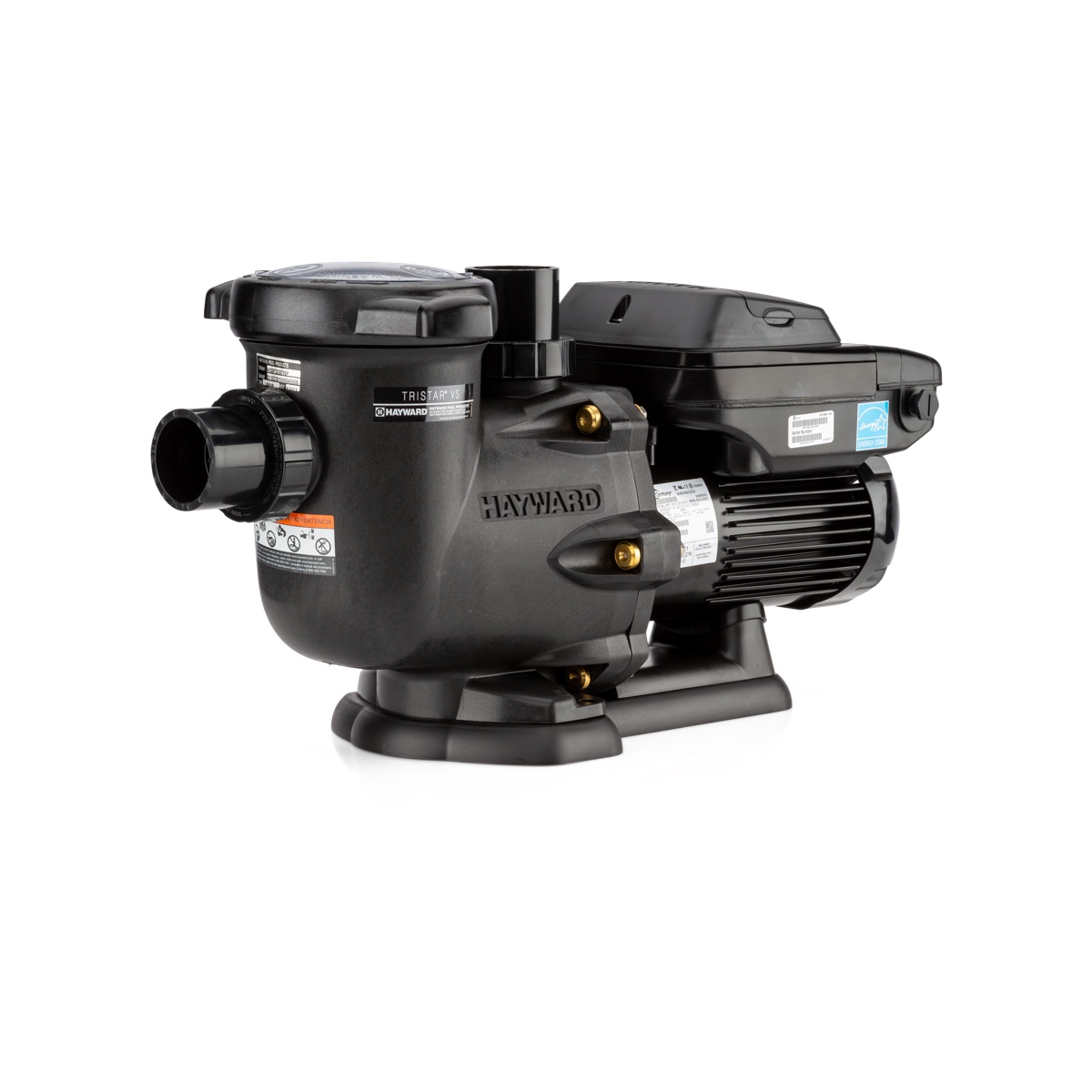
Your pick if you've got a large or high-head pool — the 1.85 HP of headroom and a 4.7★ owner rating earn the premium; on an average-size pool it's more pump than you need.
- 1.85 THP with high flow — handles large pools, long pipe runs, water features, and in-floor cleaning that 1.5 HP pumps strain on
- Fully programmable variable speed; ENERGY STAR certified
- Strong owner rating (4.7★ across 310) plus Hayward's dealer and parts network
- The most expensive pump here, and more pump than an average-size pool needs
- The buy-box seller (PoolGoods) has no row on Hayward's own list of authorized online sellers, and Hayward's warranty is for authorized sellers only — open See All Buying Options and choose Pool Supplies Superstore, which Hayward's list marks as authorized for Amazon
- 230V and a larger footprint — confirm your pad and plumbing
- You pay for headroom you may not use on a standard pool
The motor is the failure, and Hayward's parts policy is the cost: bearings gone after a flood, a pump dead at 14 months, one owner on a third motor in five years — and the motor "cannot be purchased alone", so the fix is the whole power end at about $1,199. A second cluster is shipping damage on arrival (torn boxes, a broken control housing), and owners describe Hayward support and programming documentation as thin.
17 critical reviews against a 310 base (about 5.5%, the smallest share in this field), re-read 2026-10-08 with nothing newer than January 2025; of the first 10, 4 describe a motor or early failure, 3 shipping damage on arrival, 2 absent customer service or documentation · critical reviews read October 2026

Your pick if you want variable-speed savings for the least money — about $599, fits in-ground or above-ground, and a strong 4.4★; the trade is an off-brand with no dealer network behind it and a rating pooled across three horsepowers.
- Cheapest path to variable-speed savings by a wide margin (~$599, against $999 and up for everything else here)
- Strong owner rating (4.4★ across 255, pooled across the three horsepowers) and works for in-ground OR above-ground pools
- Self-priming with a built-in filter basket; the longest no-strings warranty of the pool brands — 2 years, 3 registered, no dealer clause
- Off-brand — no Pentair/Hayward dealer network, and long-term parts and warranty support are the open question; one owner reports a leak at three weeks and no reply from AQUASTRONG
- The rating is pooled: the 1.5, 2 and 3 HP versions share one review base (255), presented on Amazon as "Color" options, and every visible review is dated 2026 — a young base
- Owners say it under-delivers on the label: 3,670 RPM at the top setting against 4,000 advertised, weaker than the 1.75 HP Pentair it replaced; max flow isn't published and the manual says not to run it at max RPM for hours
- Not ENERGY STAR listed — the brand's own site does not claim it — so it will not qualify for a rebate that asks for the badge
- 220V only — the listing and the maker both say so, so a 115V above-ground pad needs another pump
It does less than the label says: owners measure 3,670 RPM at the top setting against 4,000 advertised, find it weaker than the old single-speed it replaced, and learn from the manual that it should not run at max RPM for hours. The defects are early — a leak between pump and motor at three weeks, bearings noisy at three weeks, rain getting into the control panel — and the brand did not answer one owner's leak report.
17 critical reviews when the base was 233, in September (about 7%, pooled across three horsepowers); of the first 10 read, 3 describe under-delivery on flow or RPM, 3 an early leak, bearing noise or water in the control panel, 1 no reply from the brand, 2 fit or plumbing size · critical reviews read September 2026
FAQ
Hayward TriStar VS or AQUASTRONG — which should I buy?
Choose by pool. The Hayward is our showdown's best overall and its 1.85 total HP and high flow are for a large or high-head pool; the AQUASTRONG is for the smallest outlay, about $599, including on an above-ground pool. The AQUASTRONG publishes no max flow, so it is hard to size confidently for anything large, and it is not on the EPA's ENERGY STAR list if your utility rebate needs that.
Is the AQUASTRONG really only three tenths of a star behind a Hayward?
On the raw numbers yes — 4.4★ against 4.7★ — and that is why we would not decide on star averages here. The Hayward's score rests on 310 ratings; the AQUASTRONG's rests on 255 pooled across its three horsepowers on a young base. The specs, the ENERGY STAR status and the support network are the more useful comparison.
Full fight coverage
Every number on this page derives from the same verified data that renders our showdowns — dated owner-rating reads, MSRP-based tiers, and rulings only where a real fight happened. Data last verified: October 2026. Methodology and monetization disclosure: how we test.